Lubricants in vehicle interiors represent hidden high-tech. Ideally, vehicle occupants never notice the lubrication points around them. Yet every one of these points involves highly demanding engineering, explain Dr. Matthias Ostertag of FUCHS and Sreenivas Paruchuri of seat manufacturer GRAMMER. They discuss unwanted noises, complex material interactions, and why the partnership between their companies goes far beyond a supplier agreement.
Dr. Ostertag, what automotive noise drives you personally crazy?

Dr. Matthias Ostertag is Head of Global Business Segment Automotive Components at FUCHS.
Ostertag: The one that bothers me most is an unexpected creak or squeak that you simply can't track down. In a premium vehicle, you expect a quiet and refined cabin, so even a minor noise can become surprisingly noticeable. This challenge becomes even greater with the rise of electric mobility.
Can you explain why?
Ostertag: The shift to electric mobility makes this issue even more important. Without the background noise of a combustion engine, many sounds that were once masked become immediately noticeable. Customer expectations are rising accordingly. Creating a quiet, high-quality interior is becoming a key differentiator, and the companies that master it first will have a clear advantage in the market.
Where exactly are lubricants used in vehicle interiors, and what must they achieve?
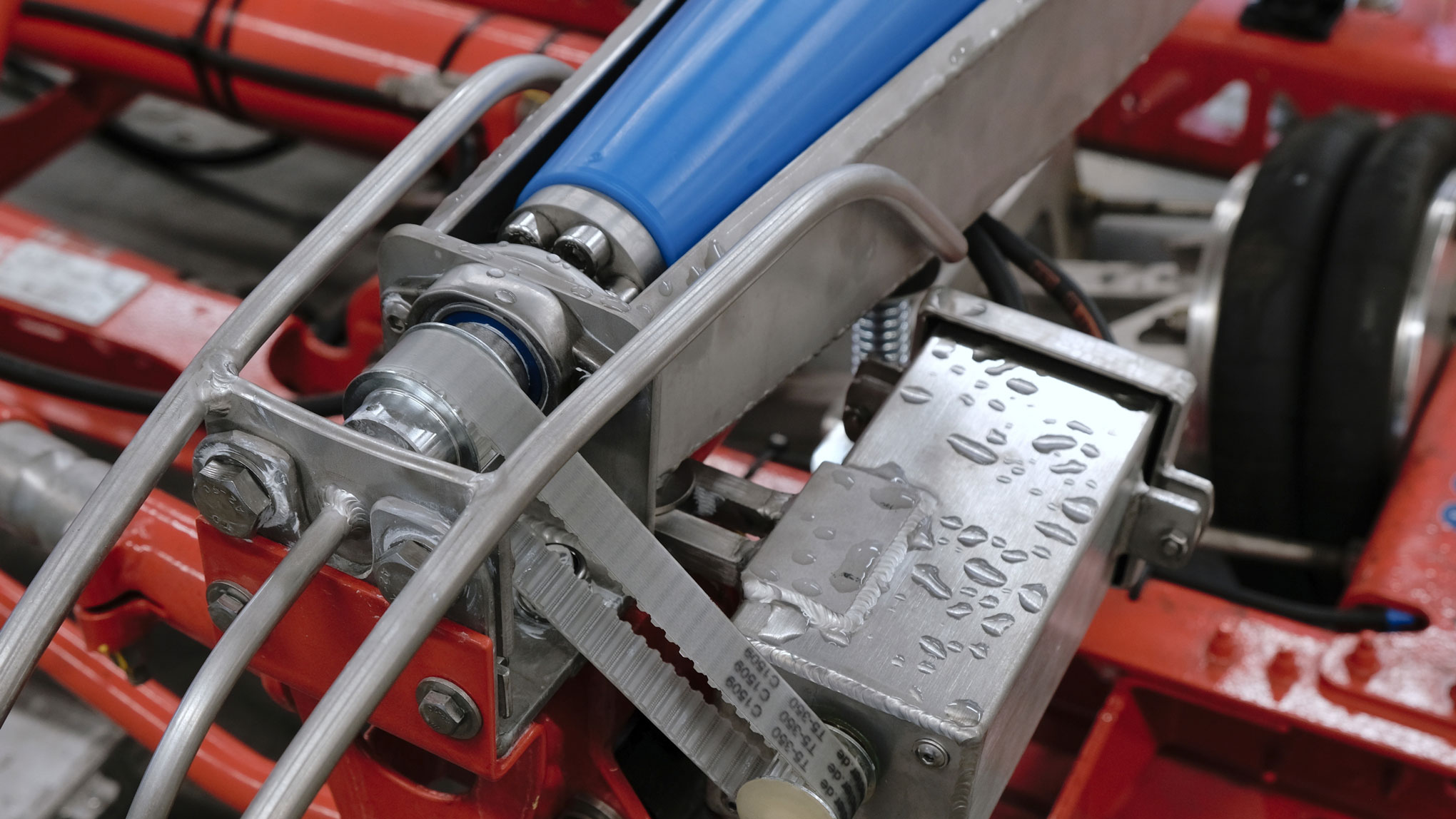
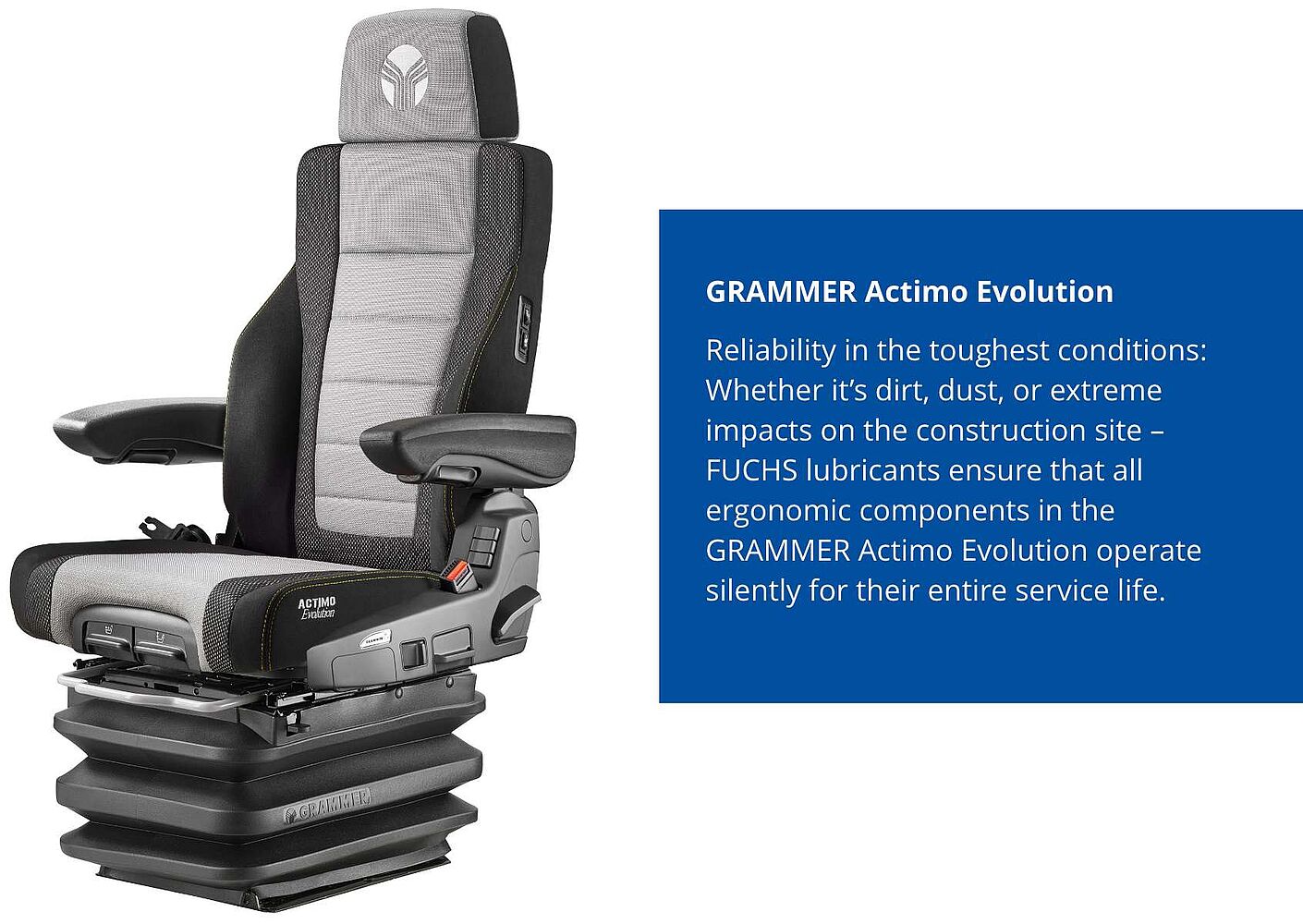
Ostertag: There are numerous applications. Broadly speaking, lubrication points can be found wherever moving components are used in or around a vehicle's interior, as well as in related systems such as braking systems. Seats are a particularly good example: a single seat can contain up to 35 individual lubrication points. We develop highly specialized lubricants for specific applications, whether in a headrest adjustment mechanism, a seat track system, or another seat component. This expertise extends beyond passenger cars to virtually all types of wheeled vehicles, including trucks, buses, construction equipment, and agricultural machinery.
Sreenivas Paruchuri is responsible for Materials, Sustainability and Technology Management at GRAMMER AG.
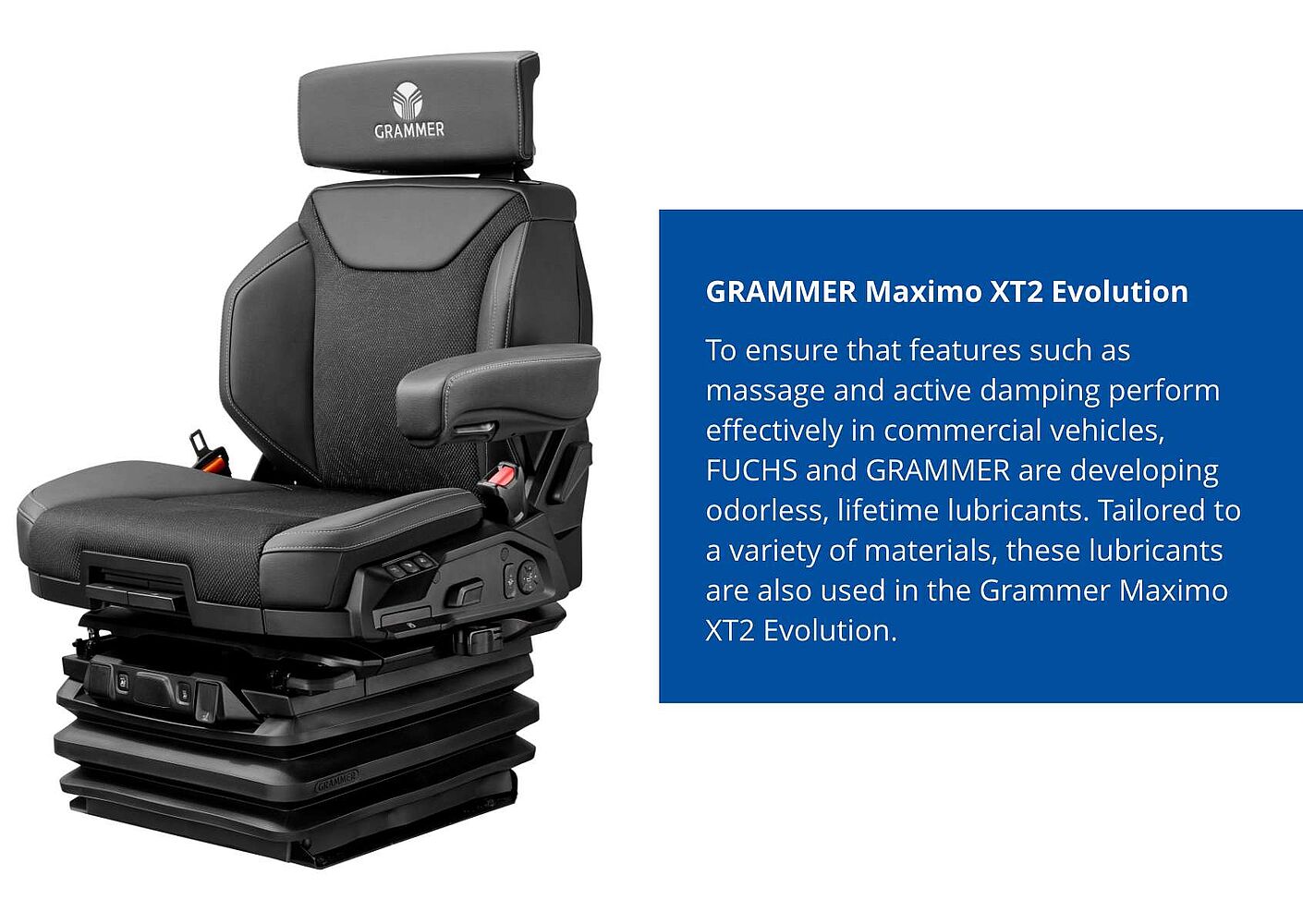
Paruchuri: From GRAMMER's perspective, the key terms are hidden behind the acronyms NVH and BSR. NVH stands for Noise, Vibration, and Harshness. BSR stands for Buzz, Squeak, and Rattle. Odor, comfort, and safety are equally important to us. Increasingly, we are also focusing on what we call quality sounds. In quiet electric vehicles, passengers can hear intentionally designed sounds that communicate a sense of premium quality. The role lubricants can play in this area is a fascinating new topic.
What new requirements have emerged over the past ten years?
Paruchuri: Systems have become significantly more complex. In the past, we used differentiated designs consisting of many individual parts. Today, we increasingly rely on integrated designs, where a subsystem that once consisted of ten separate components becomes a single part. At the same time, the variety of materials has increased enormously. We speak of multi-materiality, meaning the simultaneous use of many different materials. Take a headrest, for example: five to seven different materials may all be in contact with the lubricant at the same time.
Certain amorphous plastics are not compatible with greases, which creates a real challenge. Current simulation tools still cannot fully predict these interactions. We often discover such issues only at a very late stage, sometimes just before production readiness.
Lubricants aren’t just auxiliary materials; they’re actual components in the development phase.
Which interior applications are particularly critical?
Ostertag: "Safety-critical components are naturally at the top of the list. If a lubricant fails in a braking or steering system, the consequences can be significant. That is why we develop lubricants that are designed to last for the entire lifetime of the vehicle. They are applied once during manufacturing and must continue to perform reliably under all operating conditions, from Siberian winters to extreme desert heat.
Seats are another interesting example. While people do not always think of them as safety-related components, they must function reliably and must not move unexpectedly while the vehicle is in operation. This places demanding requirements on the lubricants used in seat adjustment mechanisms.
There are also less obvious challenges. For example, lubricants used in headrest adjustment systems are located very close to the vehicle occupant. As a result, they must be virtually odorless and meet strict health and safety standards. In some cases, we even develop lubricants with food-grade credentials. This ensures the highest level of safety, even in situations where a child touches a lubricated component and then puts their hands near their mouth."
GRAMMER has been working with FUCHS for years. What has made this partnership so enduring?
Ostertag: Product quality and technological expertise are fundamental, but our real differentiator is the combination of global reach and local support. Wherever GRAMMER has operations, FUCHS is typically present as well, with local manufacturing, logistics capabilities, and technical specialists on the ground. This means customers can benefit from global standards while receiving direct, hands-on support in their own region. It is not simply a network of sales offices. It is a global organization built around customer proximity and technical partnership.
Paruchuri: That proximity is essential to our day-to-day business. If an issue arises at one of our plants, the local colleague can simply pick up the phone and call the local FUCHS contact directly, without any detours. Given today's ever-shorter development cycles, we need a partner who responds quickly and ideally already has a solution ready. FUCHS delivers exactly that.
35 individual lubrication points may be located within a single seat.
Can you share an example of the innovation that comes from this collaboration?
Ostertag: One of the biggest misconceptions is that lubricants are selected only after a component has been designed. In reality, the best results are achieved when lubrication is considered from the very beginning as part of the engineering process.
That is exactly how we work with GRAMMER. Our development teams jointly define performance targets, screen potential lubricant technologies, and test them extensively on specialized FUCHS test equipment. The most promising formulations are then evaluated directly in GRAMMER's components.
By combining our lubrication expertise with GRAMMER's application know-how, we can accelerate development, reduce trial-and-error testing, and create solutions that deliver the required performance, durability, and user experience throughout the lifetime of the product.
Paruchuri: Last year, we encountered a case where a lubricant attacked a plastic component. FUCHS quickly proposed an alternative, allowing us to move forward without delay. Another example is the dry-film lubricants offered by FUCHS. We are planning to use them in the future because we see significant potential, not only in terms of functionality but also regarding surface quality and tactile feel.
Which trends will shape your collaboration in the coming years?
Ostertag: PFAS-free lubricants are high on the agenda. Automotive manufacturers worldwide are increasingly seeking alternatives to products containing per- and polyfluoroalkyl substances. This creates significant pressure across the value chain, including lubricant suppliers. FUCHS has been developing PFAS-free alternatives for many years.
The second major trend is sustainability. Customers are looking for lubricants with a lower carbon footprint, and we can contribute in several ways, from raw material selection to improving operational efficiency. In doing so, we help companies like GRAMMER reduce their overall environmental impact.
Paruchuri: PFAS is also a key issue for us. In addition, new challenges are arising from the End-of-Life Vehicle (ELV) Regulation. We are increasingly required to incorporate materials from closed-loop recycling streams, including recycled content derived from end-of-life vehicles.
That may sound straightforward, but it is actually quite complex. Polypropylene containing recycled material behaves differently from virgin material. Adhesives that once worked perfectly may suddenly fail. At the same time, the interior landscape of vehicles continues to evolve. Electric vehicles bring not only quieter cabins but also entirely new acoustic phenomena. One example is TIZ noise, a high-frequency sound that can originate from an electric motor and has already become a topic of discussion among EV drivers.
7 different materials may come into contact with one another in a headrest.
Finally, if budget and time were no object, what idea would you implement immediately?
Paruchuri: For me, it all comes down to friction. Even the smallest reduction in friction can lead to significant gains in efficiency, energy savings, and sustainability. If we could improve the efficiency of a system by just a fraction, the impact would be enormous when multiplied across millions of vehicles and applications worldwide. That is where I see the greatest opportunity.
Ostertag: I couldn't agree more. Some of the most meaningful innovations begin with small improvements that are multiplied millions of times over. Working together to reduce friction and increase efficiency across the mobility sector would be a truly worthwhile mission.