FUCHS × WINDEY Unveil Industry-First White Paper on Immersion Energy Storage Long-Term Testing
Cooperation Background
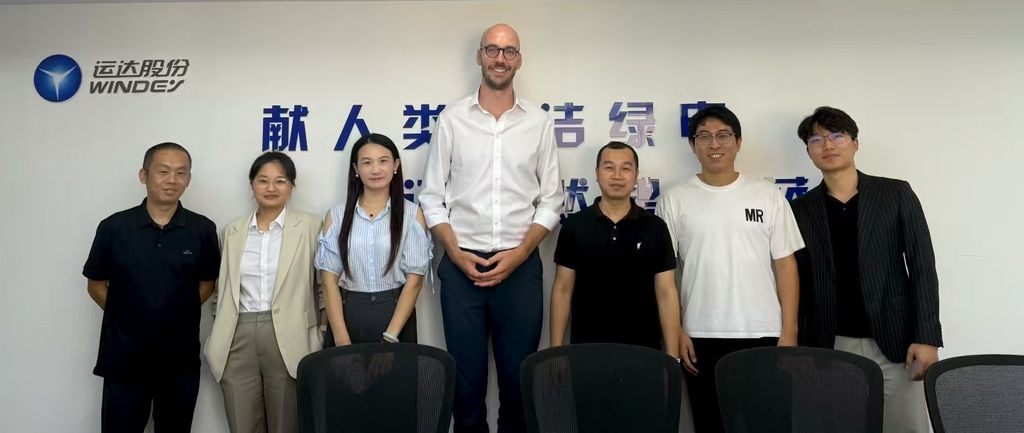
On April 10, 2025, FUCHS and WINDEY (a leading domestic energy storage enterprise) signed a Joint R&D Memorandum on Immersion Energy Storage Technology at the opening ceremony of ESIE 2025. Centering on thermal management, a core link in energy storage systems, the two parties joined hands to advance the R&D and application of immersion liquid cooling technology, aiming to address three key industry pain points: safety risks, limited service life, and low operational efficiency of energy storage systems.
Testing & Verification: Rigorous Validation for 10-Year Lifespan Simulation
Shortly after the signing, the two parties launched a rigorous 3,000+ hour accelerated testing program, which was designed to simulate 10 years of continuous operation of immersion energy storage systems. The core objective was to fully verify the material compatibility and long-term operational reliability of the system. The testing framework covered three key dimensions:
- Testing Scope: Focused on the compatibility verification between WINDEY’s immersion energy storage system (including battery cells, pipelines, seals, and other core components) and FUCHS’ professional immersion coolant.
- Testing Methodology: Adopted accelerated aging test protocols such as high-temperature cycling and long-term immersion pressure tests. The tests comprehensively evaluated three core capabilities: chemical stability of materials (no corrosion, swelling, or degradation), thermal management efficiency (uniform temperature control and rapid heat dissipation), and continuous operational stability of the system.
- Data Validation: The joint technical teams of FUCHS and WINDEY conducted cross-validation on key test data, including material deformation, physicochemical properties of coolants, and battery cell capacity retention rate, ensuring the objectivity, accuracy, and authority of the test results.
Core Achievements: Breaking Through Industry Bottlenecks, Leading Standard Formulation
- Core Performance Fully Validated: Under the scenario simulating 10 years of service life, key performance indicators of the system—such as battery cell capacity decay rate and coolant heat dissipation efficiency—all met or exceeded existing industry standards. The long-term stable operation capability of the immersion energy storage system was fully confirmed by empirical data.
- Pioneering Long-Term Reliability Verification: As the first batch of enterprises in the industry to release the results of the "10-year lifespan simulation test for immersion energy storage systems," FUCHS and WINDEY successfully filled the industry gap in long-term reliability verification. The test data provided crucial technical support for the commercialization of immersion energy storage technology.
- Enhancing Technical Credibility: The test results fully demonstrated that immersion energy storage technology can support long-term stable operation, effectively promoting the industry’s development from the "concept validation stage" to the "large-scale commercial application stage."
- Establishing Standard Evaluation Framework: The white paper proposes a systematic "immersion energy storage service life assessment model," which provides important guidance for the formulation of unified industry norms and helps regulate the healthy development of the industry.
- Catalyzing Commercialization Process: The verified stable performance, coupled with the joint endorsement of two leading enterprises in the industry, effectively reduces market entry barriers for immersion energy storage technology and accelerates its large-scale application in the market.
Through 3,000+ hours of rigorous empirical testing, FUCHS and WINDEY have comprehensively verified the long-term stable operation capability of immersion energy storage systems and released the industry’s first white paper on long-term testing results.
This cooperation not only resolves core technical bottlenecks restricting the development of the immersion energy storage industry but also sets a clear technological benchmark for the industry. By virtue of collaborative innovation and open sharing of test data, the two parties have provided strong technical support for advancing the national "dual carbon" strategy, heralding the official entry of the energy storage industry into a new era of standardized development driven by immersion liquid cooling technology.